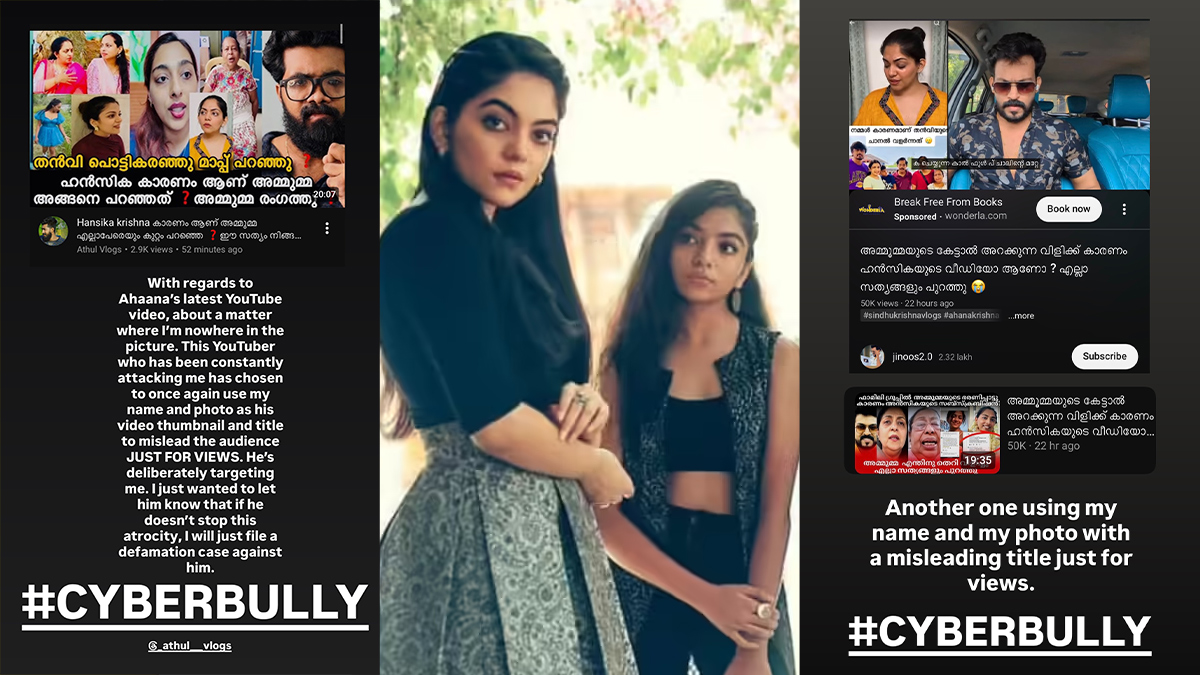
Social media personality and actress Hansika Krishna has broken her silence after discovering that her name and photographs were being used in several misleading YouTube videos. The content, according to her, attempted to associate her with an issue that had nothing to do with her, creating unnecessary confusion among viewers. Her response has drawn attention not only because of the incident itself but also because it raises a much larger concern about how public figures are portrayed on digital platforms. In an age where attention often translates into revenue, the use of sensational thumbnails and exaggerated titles has become increasingly common, leaving many celebrities to deal with the consequences of misinformation.
Hansika made it clear that she has absolutely no involvement in the matter being discussed in those videos. She explained that some creators had allegedly included her photographs and name in thumbnails or headlines even though the content itself was unrelated to her. Such practices, she said, can easily mislead viewers into believing that she played a role in the controversy. Her statement was intended to remove any misunderstanding and reassure followers that the circulating claims linking her to the issue are not true. Rather than remaining silent, she chose to publicly clarify her position to prevent further confusion.
The actress also expressed concern about the growing trend of using recognizable faces simply to increase views and engagement. According to her, content creators have a responsibility to ensure that the information they publish is accurate and that the images they use genuinely reflect the subject of the video. When a person’s identity is used without context, it can affect both public perception and personal reputation. Hansika’s response reflects the frustration many public figures experience when their photographs are used as promotional tools for stories that have no connection to them.
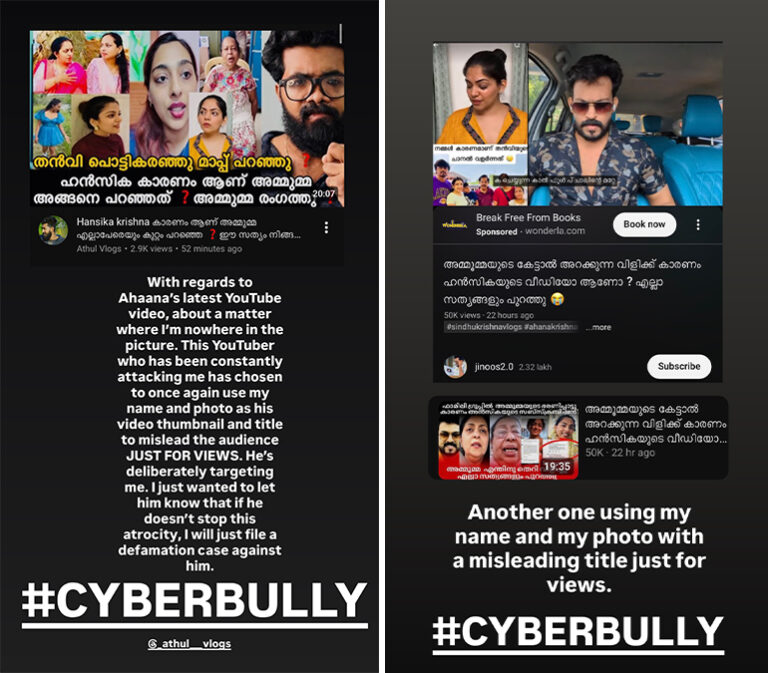
Another important point in her statement was the possibility of legal action. Hansika warned that if the misuse of her identity continues, she is prepared to pursue legal remedies against those responsible. The warning was directed at individuals or channels that allegedly use deceptive thumbnails and titles despite knowing that the information presented is inaccurate. While she did not target every YouTube creator, she emphasized that deliberately creating misleading content at the expense of another person’s reputation is unacceptable. Her remarks underline the importance of accountability in the rapidly expanding digital media landscape.
The incident has also reignited discussions about clickbait culture on social media platforms. Eye catching thumbnails are designed to attract attention, but problems arise when they present a false narrative. Viewers often form opinions before watching an entire video, making misleading images and headlines particularly influential. As a result, a person can become associated with rumours or controversies even when there is no factual basis for such claims. Digital experts have repeatedly pointed out that responsible content creation depends on accuracy, transparency and proper verification rather than sensational presentation.
Following Hansika Krishna’s statement, many of her supporters expressed solidarity on social media. Several users appreciated her decision to clarify the facts publicly instead of allowing speculation to continue. Others argued that online creators should focus on producing trustworthy content rather than relying on misleading thumbnails to attract audiences. The discussion has encouraged many viewers to verify information through reliable sources before accepting viral claims shared across social media platforms.
Although the incident centres on Hansika Krishna, it also reflects a broader challenge facing today’s digital entertainment industry. Public personalities frequently become targets of misinformation because their names attract attention. As online competition grows, the pressure to generate clicks can sometimes overshadow ethical journalism and responsible content creation. Hansika’s statement serves as a reminder that popularity should never become a reason to misuse someone’s identity or create false impressions for commercial gain.
By publicly distancing herself from the misleading videos, Hansika Krishna has reinforced the importance of protecting one’s reputation in the digital era. Her message is not only a clarification of her own position but also a call for greater responsibility among content creators. As audiences become more aware of misinformation and deceptive online practices, the demand for credible, fact based reporting continues to grow. The episode highlights why accuracy, fairness and respect for individuals remain essential values in modern digital media.